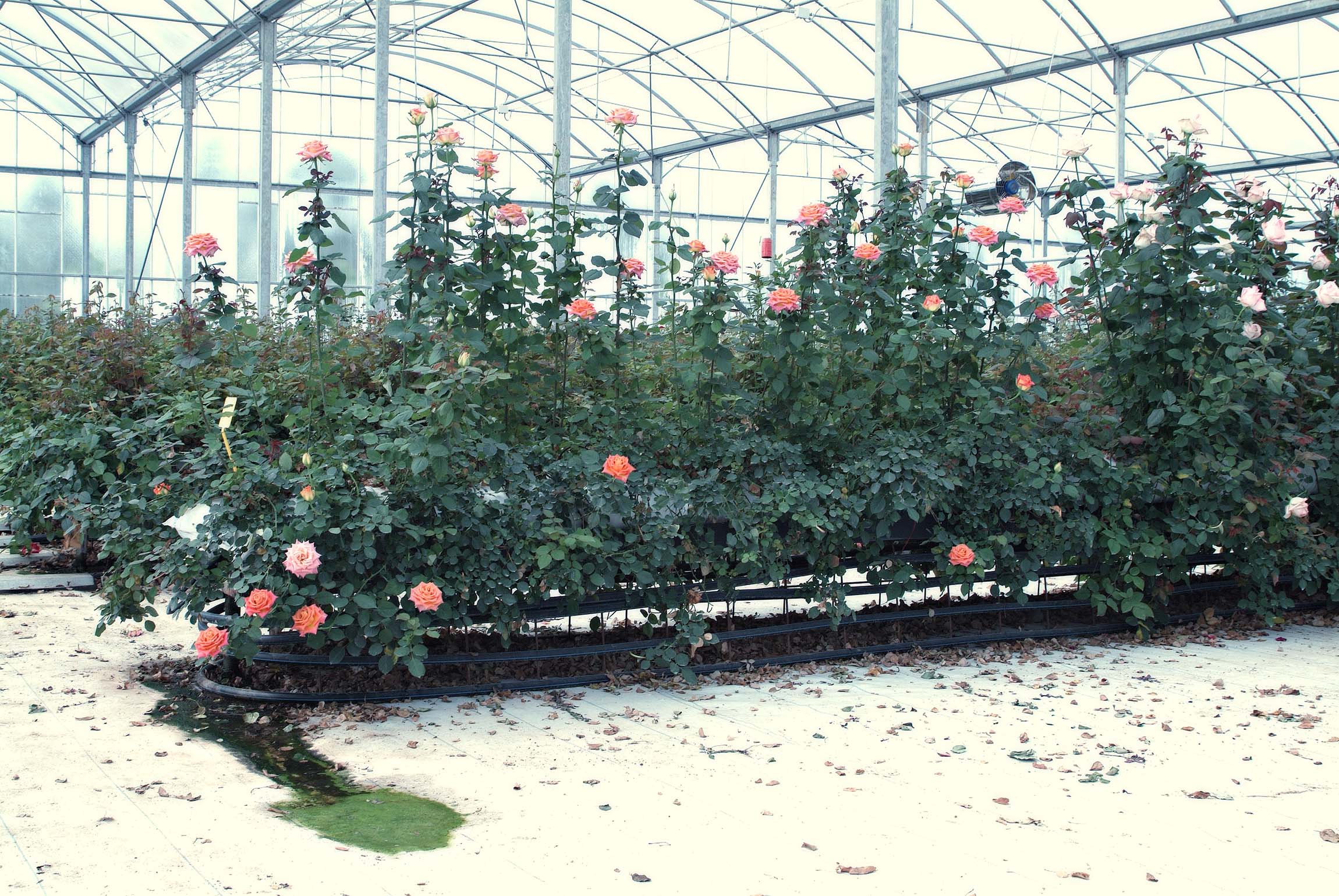
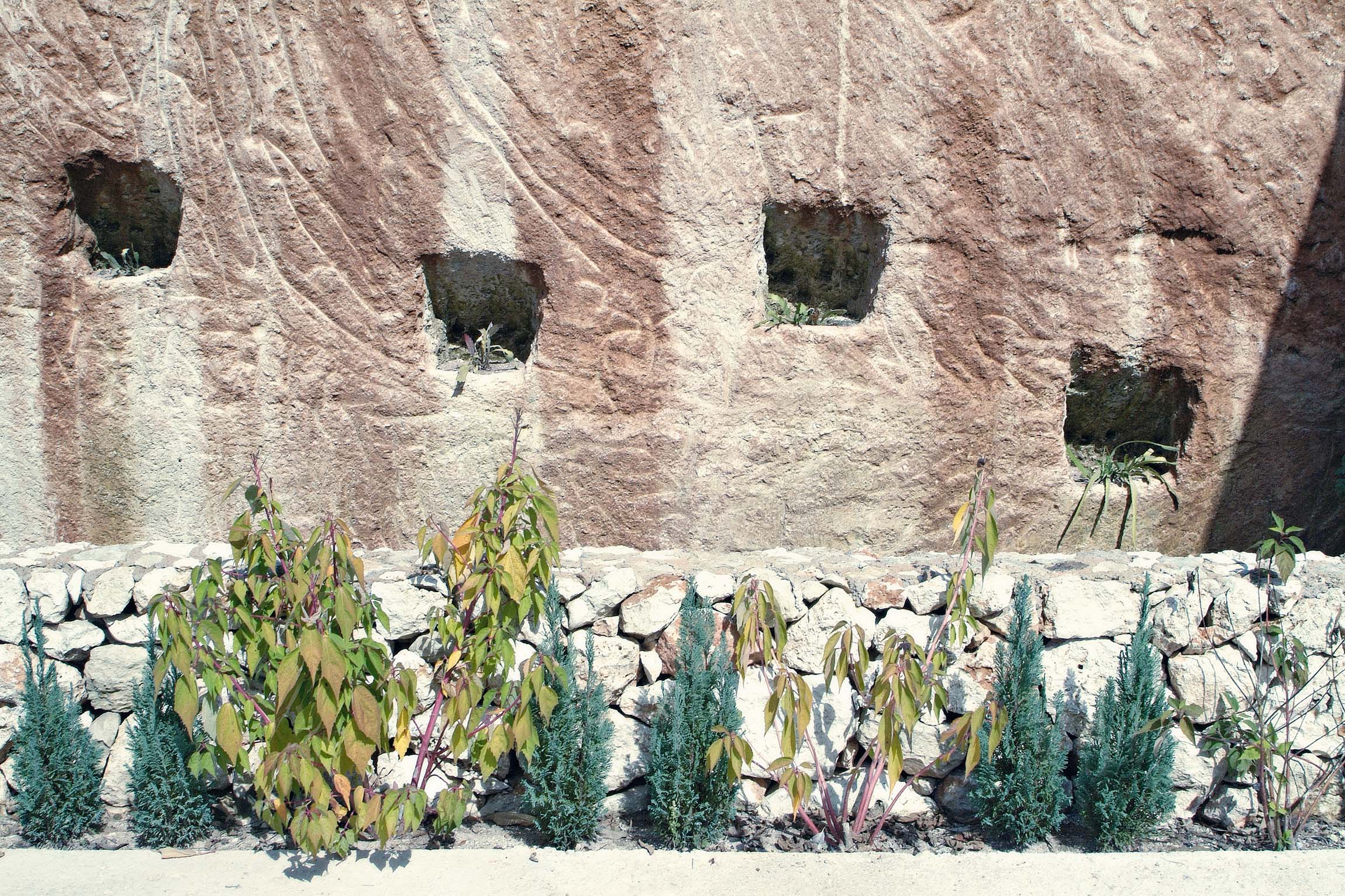
I made this series of images of plants between March and April 2004, within a few kilometres of where I live.
The idea for this series came while I was accompanying a photographer friend who wanted to take some shots in a plant nursery. I had never been to one before. I immediately had the feeling of standing before individuals who, as in other cases involving people or animals, are deported, crowded together, concentrated, transplanted, grafted, intubated, tied up, sacrificed, exploited.
The similarity with humans or animals seemed obvious to me, but with two great differences: there was no red, the colour that accompanies every tragedy of beings made of blood, only green, so much green, too much green; and there was no moan, no scream, no lament. No sound at all, just as in photographs.
While these photos are very recent, my intention of dealing photographically with “green” goes back a long way, at least to the mid-1980s, when, as a subscriber, I received an issue of the Spanish magazine PhotoVision, entitled Plantas and devoted entirely to the subject. Among the various authors, with their different conceptual and aesthetic approaches, I remember above all Carlos Cánovas and his plants trying to survive in the cities of men.
Since then I have always closely followed the photographers who have dealt with plants. From the discovery of Blossfeldt in the 1920s to the Fontcuberta of the series Herbarium, who passes off as real plants a series of assemblages of various materials that he made himself: “herbarium pretends that those assemblies are real plants, whereas Blossfeldt photographed real plants so that they looked like architectural ornaments.” (Joan Fontcuberta, Scherzi della natura, Edizioni Contrasto). Between these two positions, opposite yet reconcilable, my personal preferences certainly include Robert Mapplethorpe’s work on flowers, like all his work, thanks to his ability “…to bring together […] the immediacy of photographic conceptuality and the distance typical of the pictorial dimension, an arduous undertaking in which perhaps only Mapplethorpe succeeded…” (Claudio Marra, Fotografia e pittura nel Novecento, edizioni Bruno Mondadori).
I have also found interesting the work of the so-called American New Topographics: Baltz, Eggleston, Gossage, Shore and Robert Adams, who, in dealing with dialectical landscapes, inevitably deal with plants, which are always present, or still present, in every landscape or at its edges, overwhelmed by the presence of man or caught in the attempt to regain the upper hand over man himself. This eternal struggle between the natural and the artificial (with an uncertain outcome) remains at the basis of all research on the subject. Including that of Wim Wenders as a photographer: “you realise that, deep down, this landscape has not let itself be influenced by the asphalt, the cars and the neon advertisements, […] you have the feeling that in a hundred years none of this will be left. The landscape will once again prevail.” (Wim Wenders, Scritto nel West, edizioni Jaca Book).
In the shots I present here, the struggle between natural and artificial does not take the romantic form of nostalgia for an original natural unity, but rather the sense of a second nature: that the natural condition, by now, is the artificial one; that nothing is more artificial than the attempt to represent the natural without the cultural.
In a post-human age, in which technologies seem increasingly directed at man and his direct exploitation (transplants, prostheses, cosmetic surgery, genetic modification, human/computer hybridisation), this attention to plants may raise a smile. But if the word paradise etymologically means “enclosed place”, a bounded space (and it perfectly represents the delirious ambition of photographers to enclose the world in small, privileged spaces), hell, on the contrary, really does seem to have no limits.