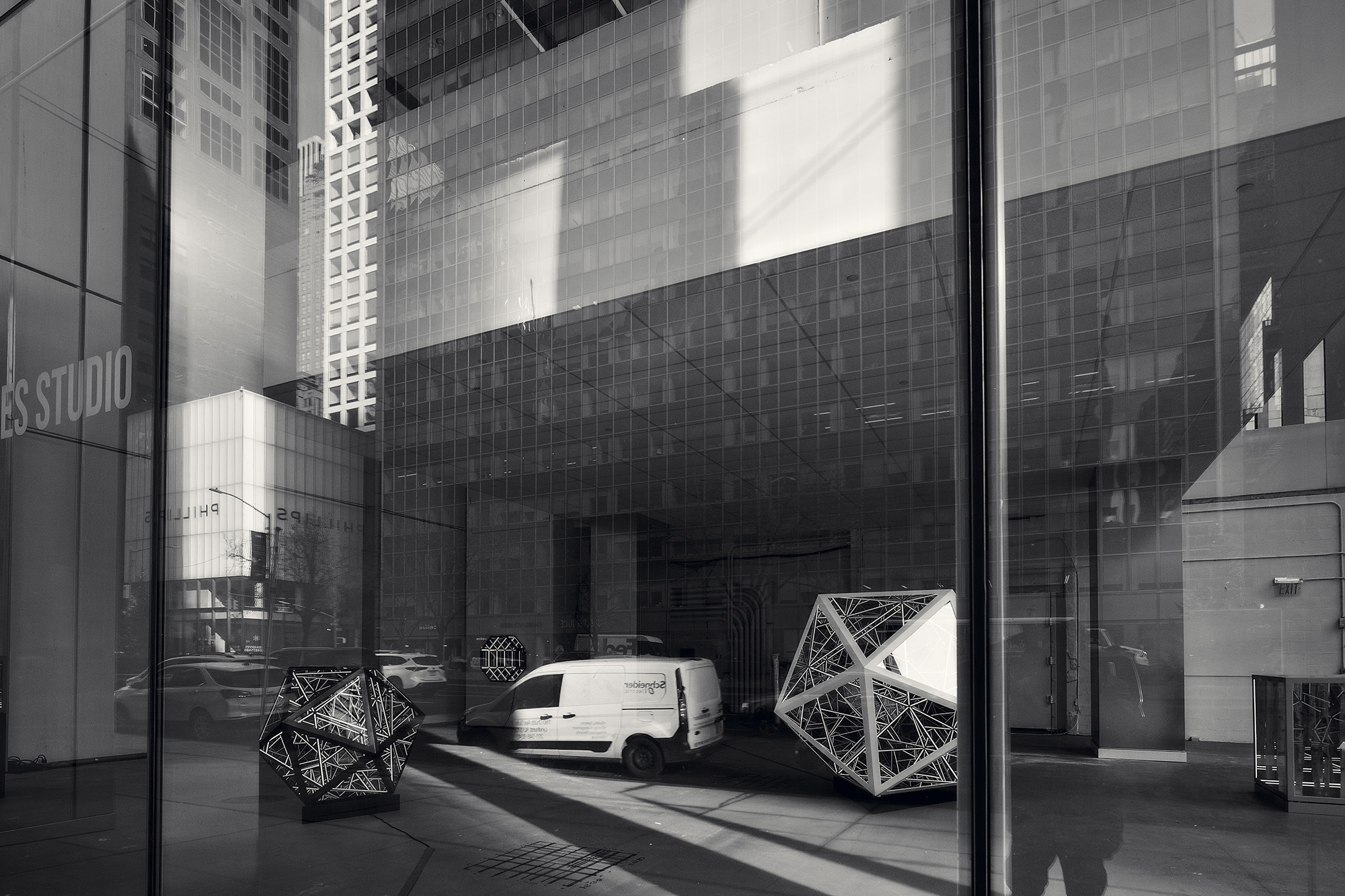
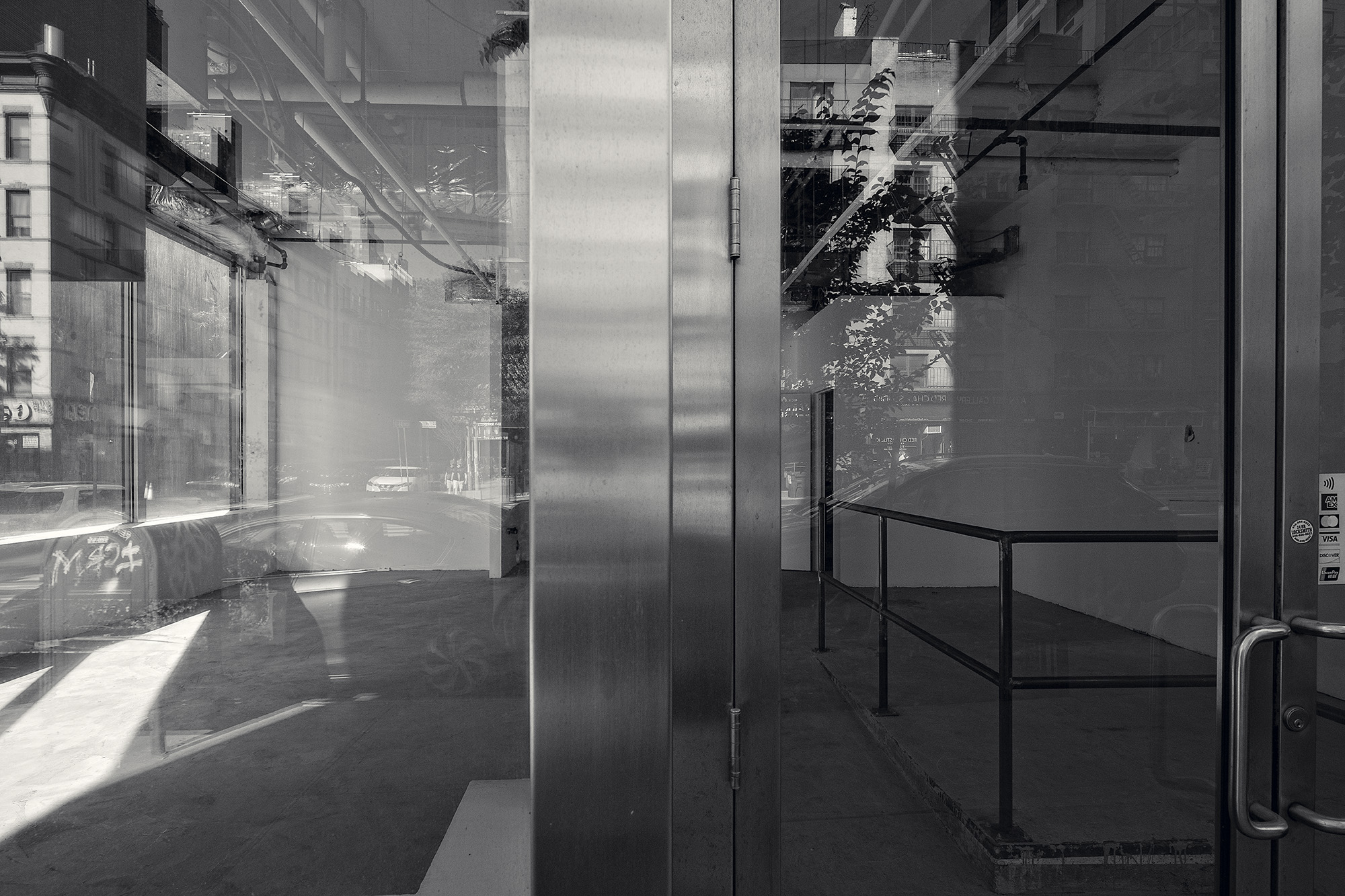
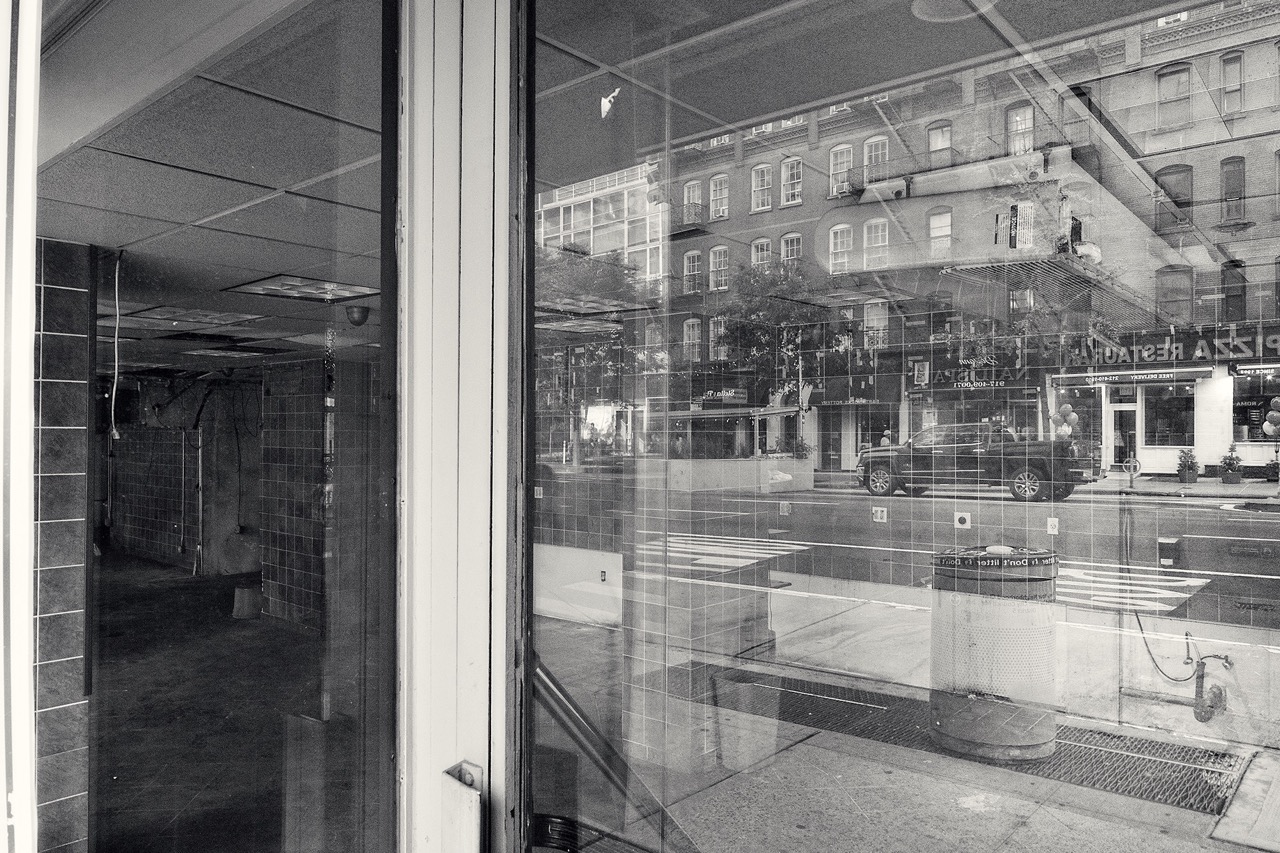
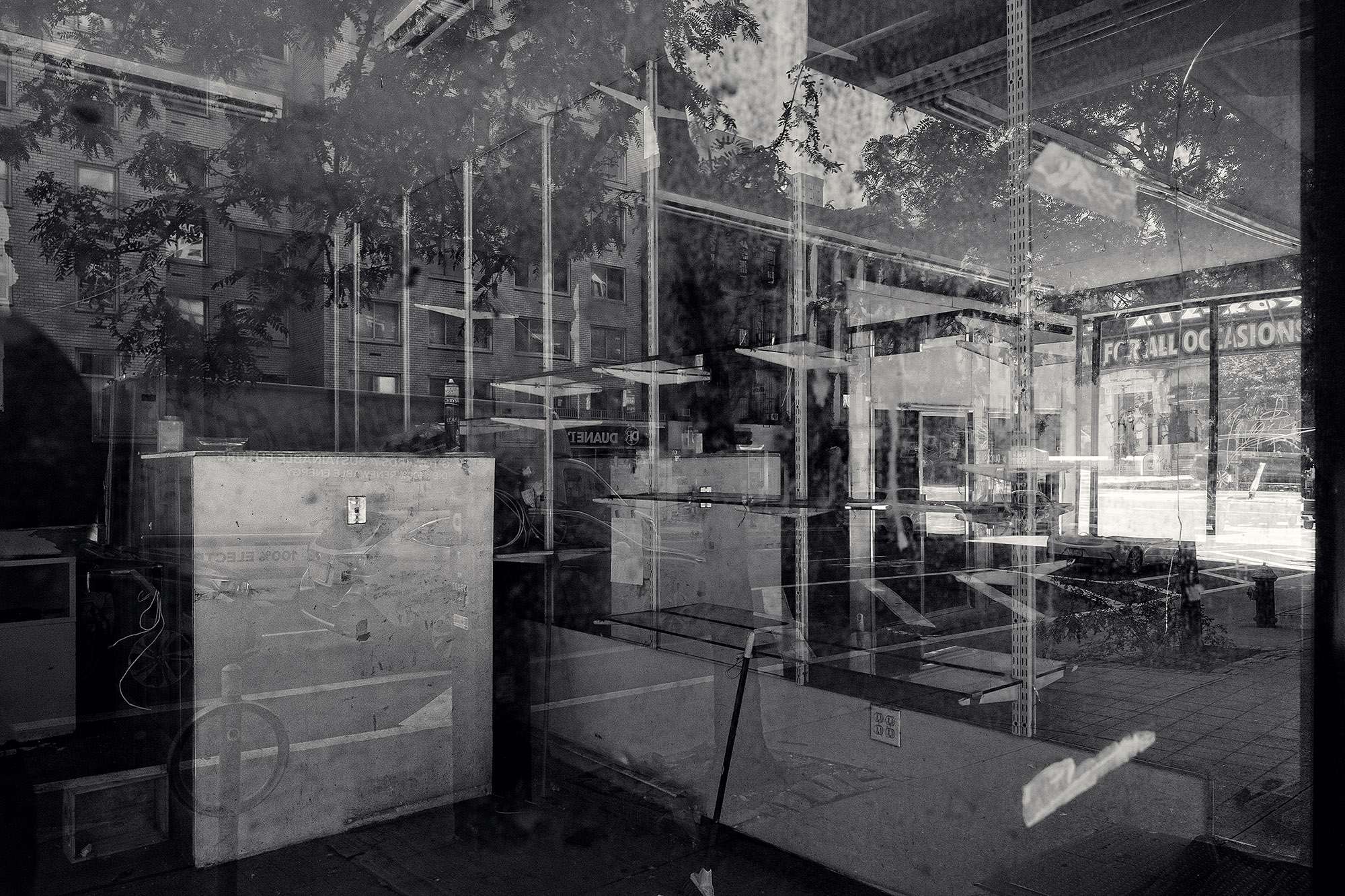
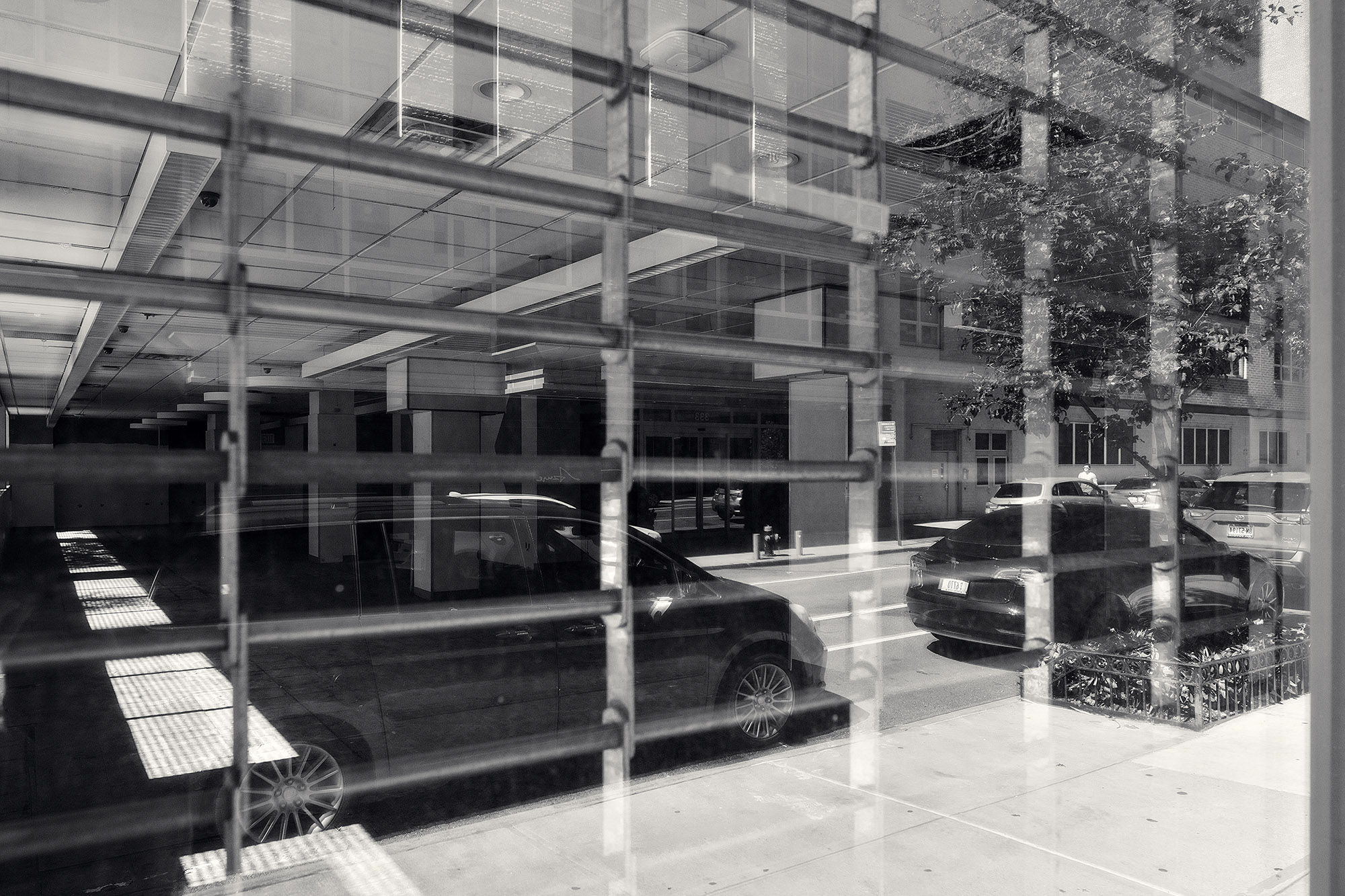
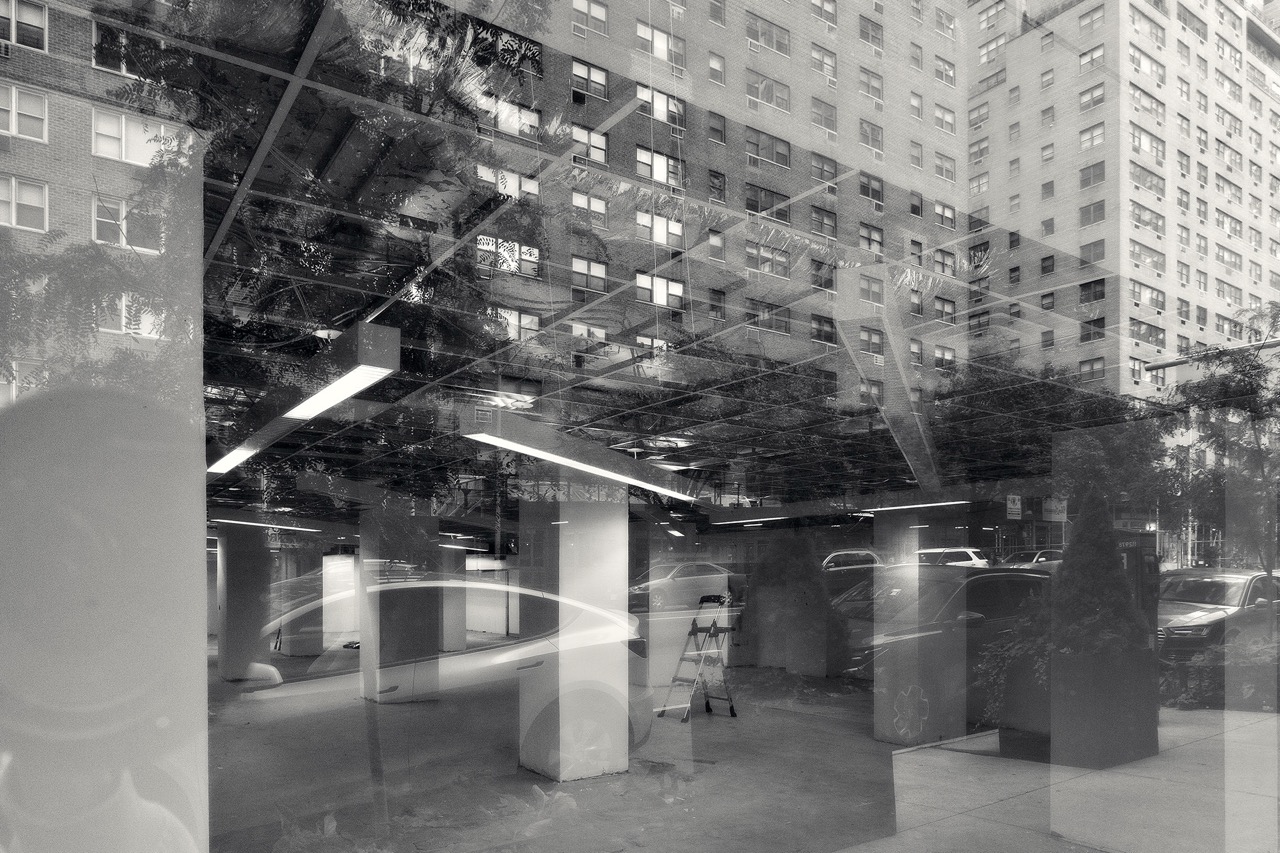
In 1978 John Szarkowski, head of the Department of Photography at MoMA in New York, introduced the concept of window photographers and mirror photographers. The former would seek to document the world, trying to make their own subjectivity less visible; the latter would transform the subject rather than simply showing it, asking the viewer to question the author of the photographs as well.
These images, taken in New York by framing the shop windows of small, closed-down businesses, are, literally, windows and mirrors at the same time. Large-scale retail first, and now e-commerce and online sales too, have caused these businesses to close.
According to Marc Augé’s well-known theory, supermarkets and hypermarkets belong, anthropologically, to the category of non-places: large spaces (airports, motorways, stations, hotels) frequented by many people who do not form relationships, who pass through anonymously and do not come into contact with one another except through functional, temporary interactions (payments, tickets, goods).
The spaces explored here, on the other hand, were places, anthropologically speaking: shopkeeper and customers know each other, there are routine relationships, and they help create the identity of a neighbourhood.
The laws of the market have erased them. These spaces are now: non-places, (no longer) places.