Every time someone, armed with a camera, hovers around another person in an attempt to take a photograph, a photographic portrait, an inescapable war breaks out.
First of all, the battle against time: from the instant a shutter opens to let light strike a sensitive surface, a countdown starts and cannot be stopped, and reality detaches itself, imperceptibly but inexorably, from its photographic representation.
The person depicted is already motionless, distant, even though the real person may be laughing and joking while looking, on a piece of paper turned over and over in their hands, at an image that is falling away.
Another battle is the one between the author and the subject, both striving, with all their strength, their history and their personality, to make the portrait convey exactly one idea: for the author, the idea he has formed, the interpretation he wants to give of the subject; for the subject, the image he tries to give of himself every day, in front of a lens as much as in the eyes of others.
Here the outcome is uncertain and depends on the balance of power: a photo by Richard Avedon is always a photo by Avedon, whether of the latest star or the lowliest tramp; on the other hand, I have never seen a photo of Warhol that was not some kind of self-portrait!
In this regard, a telling example is the photo taken by Elisabetta Catalano, a well-known portrait photographer of celebrities in the 1980s, of a conceptual artist of the time, at the artist’s own initiative. He offers himself to the photographer’s lens holding a pane of glass in front of his face, bearing the words “this is a self-portrait”. He thus wanted to reaffirm, if there were ever any need, that control over his own image remains his sole responsibility, even if someone else physically takes the shot, and that whoever takes it, professional portraitist or weekend photographer, has no influence on the result except from a purely technical point of view.
Finally, perhaps the most interesting battle, which literally breaks loose when a face becomes the object of “artistic” representation, is the one between the subjective and the objective: between the uniqueness of that face, which belongs to one specific individual, and the universality of a face that is every face, that tells the story of humanity by telling the story of a single person.
The outcome of this last clash is by no means a foregone conclusion and depends on the individual case: some faces sum up their own time and place well, some generalise to the utmost, others cannot break free from their own particularity.
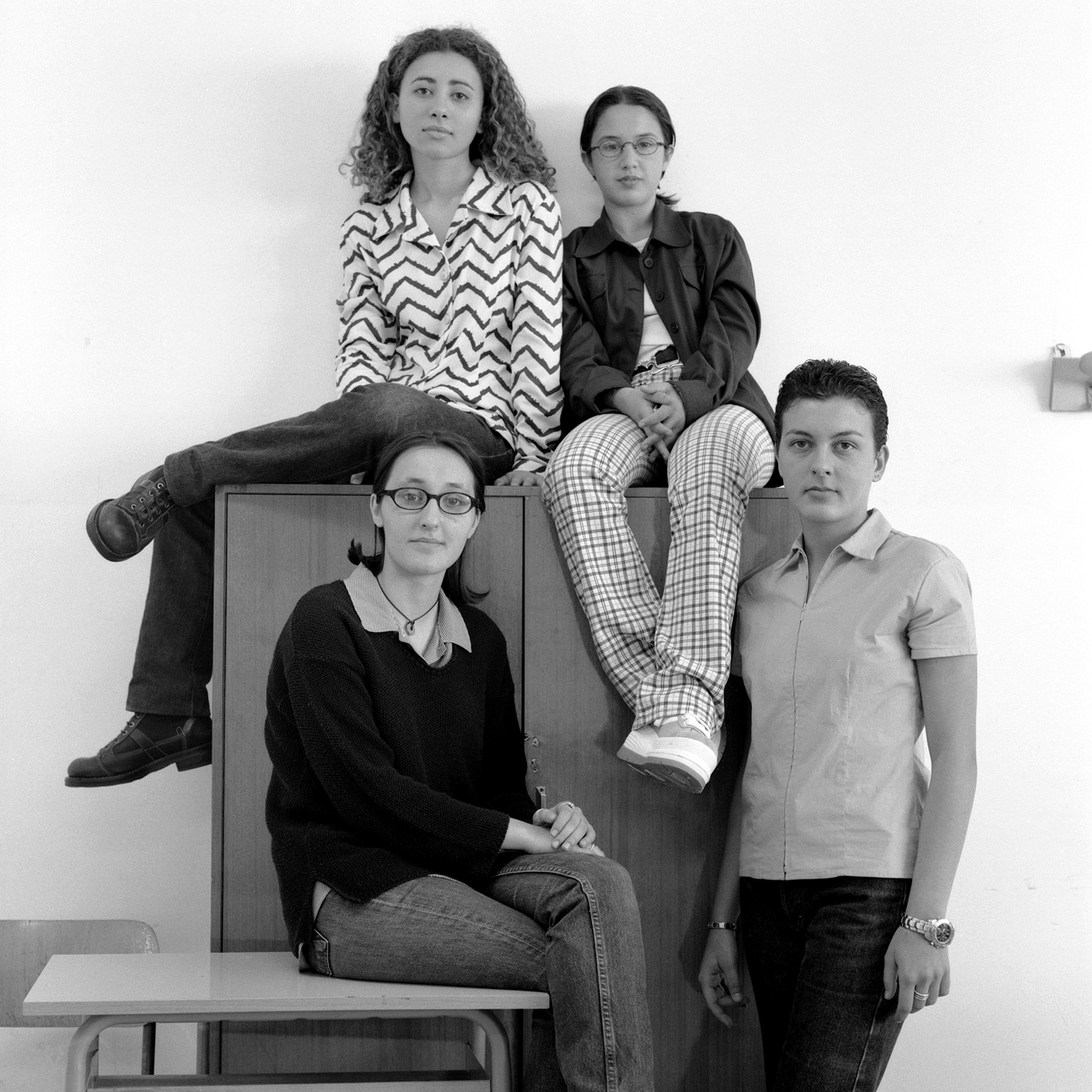
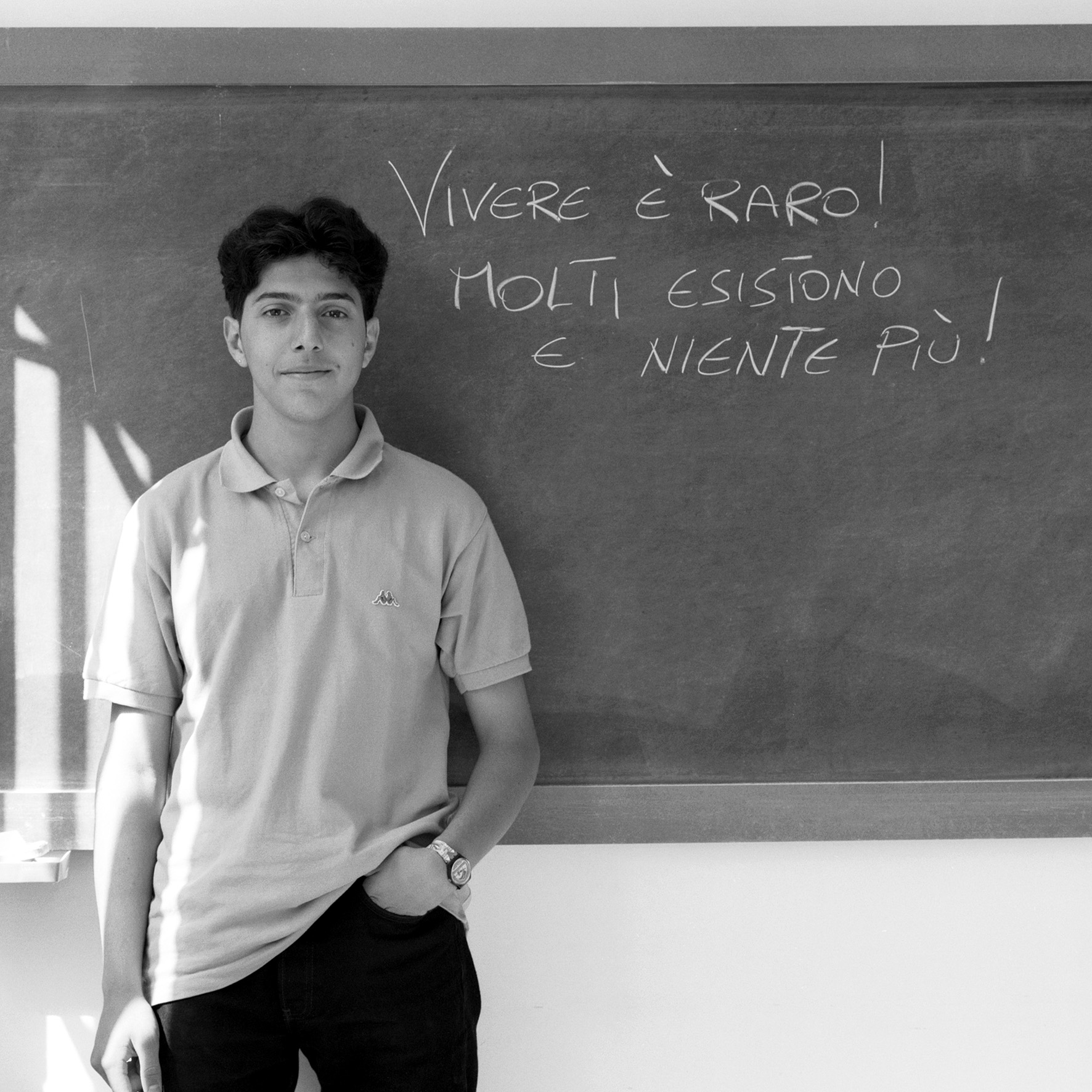
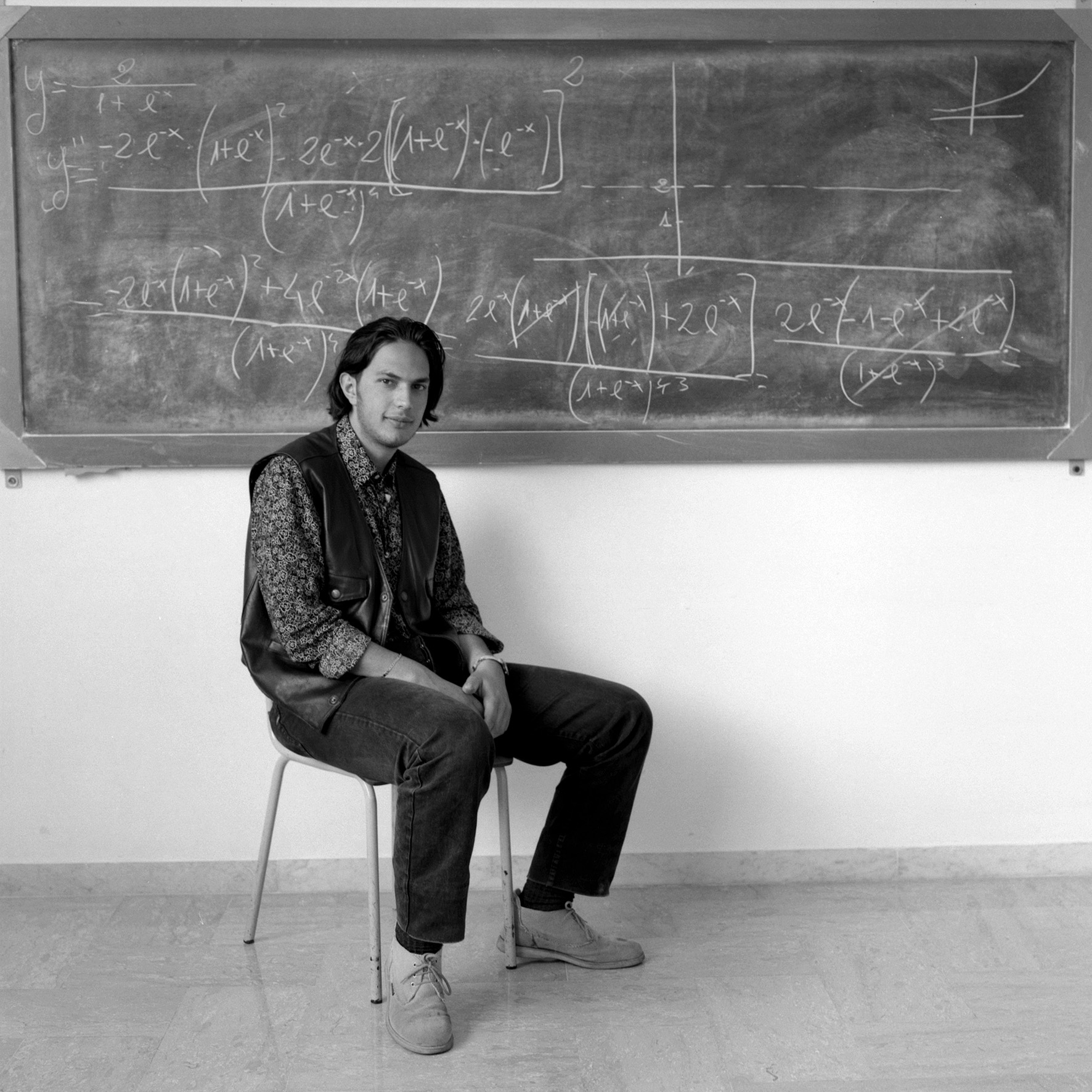
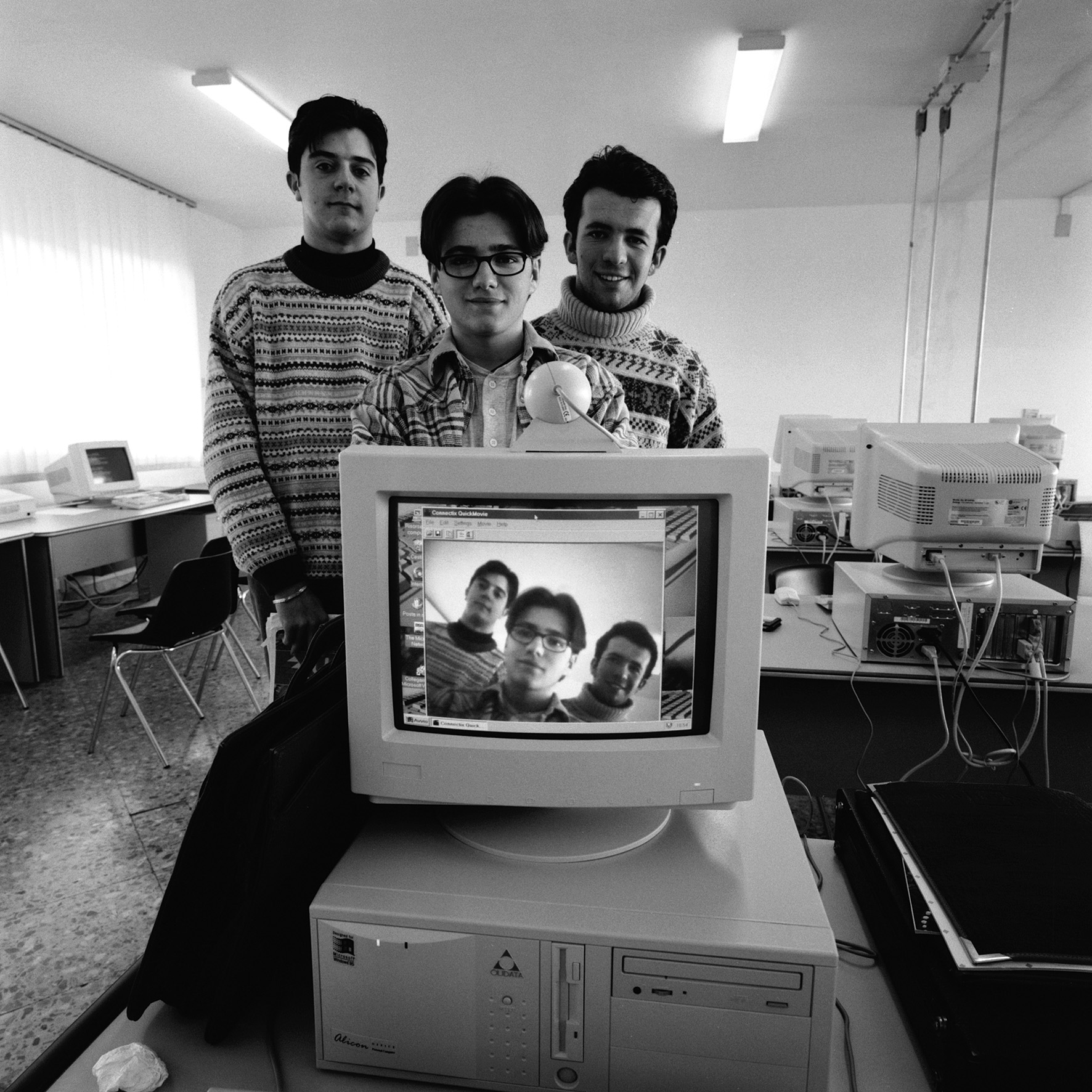
And when one attempts to make portraits in series, with elements of repetition, in standardised situations, emphasising certain distinctive features of a situation or of belonging to a group or a context, the author takes, so to speak, a step back from the subjects. It is they who take the reins, leaving the photographer only the responsibility of setting the rules.
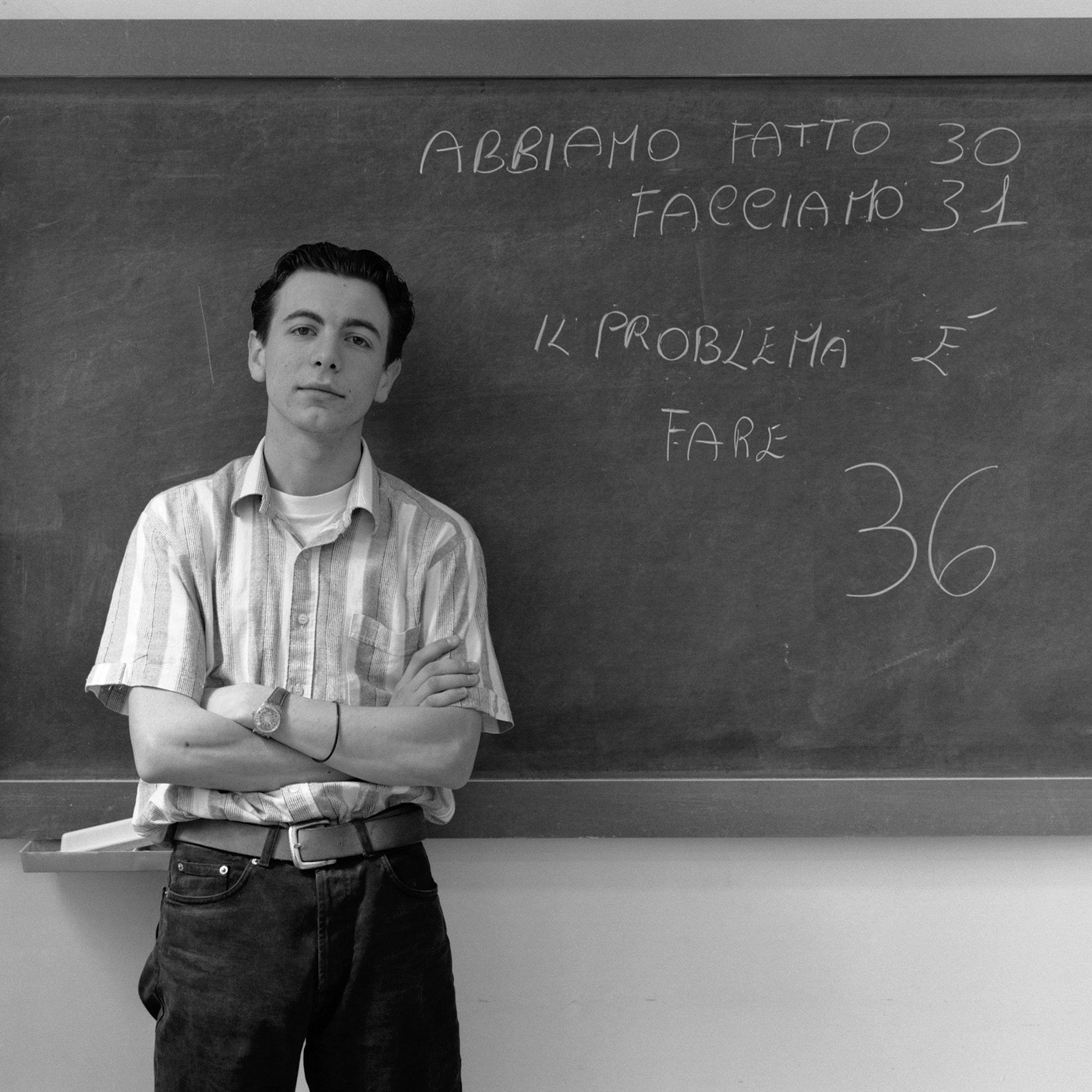
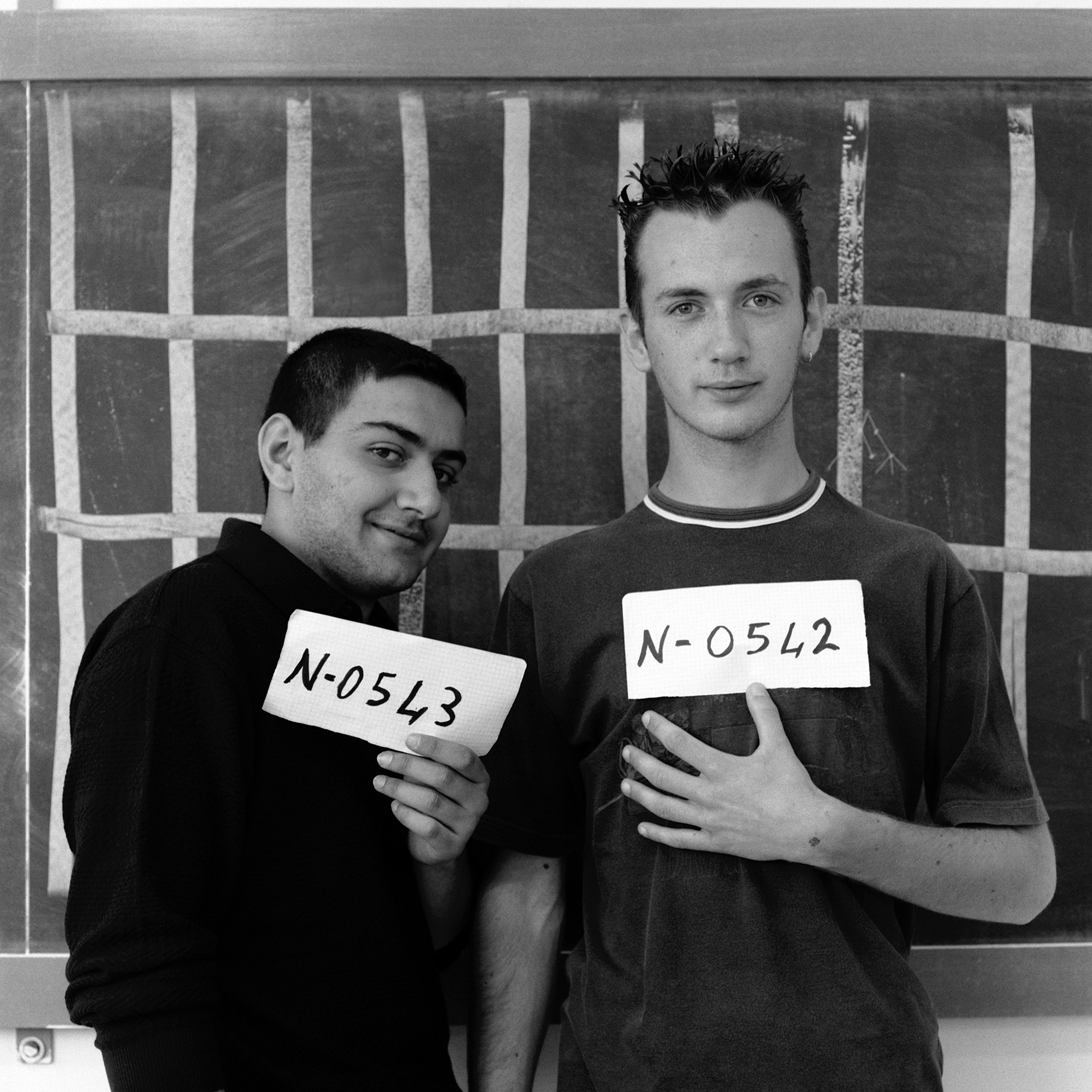
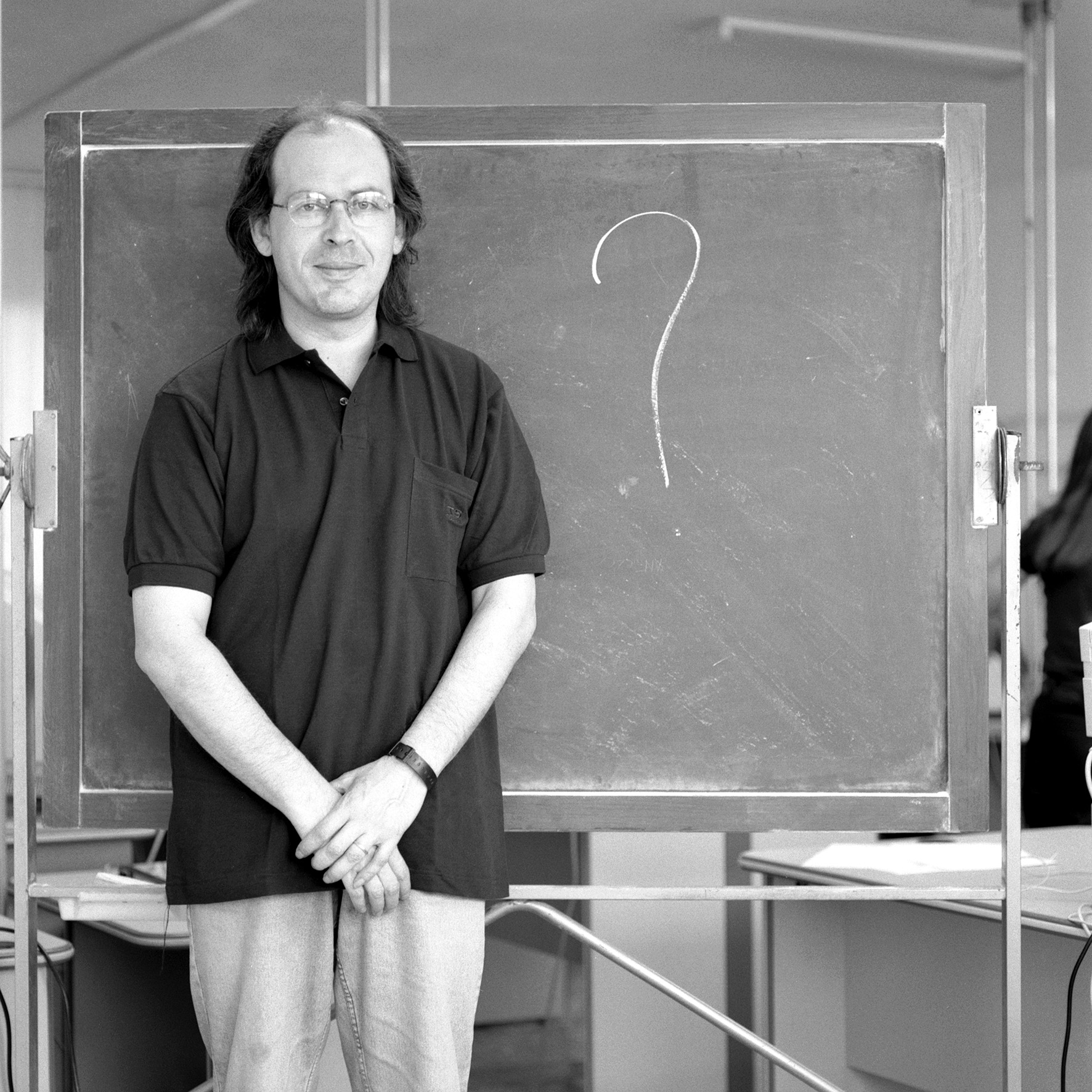
The series of photos presented here, taken years apart, is a set of signs: the meaning of the words, the handwriting, the posture, the clothing, the physiognomy, the place, the objects. The light is different, just as the people who lent themselves to it are different.