From March to October 2019 my mother, then over ninety, was confined to her bed without respite, apart from a couple of hours a day in an armchair. So I happened to spend a great deal of time at home and in her room during her heartbreaking odyssey, as she turned into something other than the person she had been throughout her long and intense life.
I wondered whether I should use the camera in this situation, naturally with my own approach to photography: not documentation, but inquiry, reflection, a form of exorcism. Some call it conceptual photography. In truth, no kind of photography can do without thought, from the simplest and most instinctive shot to the most complex and deliberate one, beyond the inevitable technological unconscious inherent in the medium…
My mother had always been reluctant to be photographed, so I immediately ruled out asking her openly. On the other hand, I have never liked stealing images of people who are unaware. Moreover, I had absolutely no wish to mediate my relationship with her through the camera in that final period. So I set the idea aside.
During the days spent beside her bed, while she slept, lay awake or drifted in and out of sleep, I used my smartphone to read. In an article by Marisa Prete on her fascinating blog ‘Finestre su Arte, Cinema e Musica’ I came across a quotation from Susan Sontag’s ‘On Photography’, which I had read long ago without giving it the attention it deserved:
“[ORIGINAL ENGLISH QUOTATION FROM SUSAN SONTAG, ON PHOTOGRAPHY – the passage beginning “To take a picture is to have an interest in things as they are…”]”
Reportage photography and photojournalism have always dealt with misfortune and suffering. Reporters photograph situations and events they do not like, but they do so, they claim, in order to contribute to change and to the solution of those problems, placing them before the eyes of the world and helping to shape movements of opinion capable of having an impact on those sad realities.
Setting aside any consideration of the validity of these justifications, and of whether human atrocities should always and in every case be represented, we are still faced with a very serious conflict of interest: photojournalists want change, but not too soon, not before they have captured, among all their shots, the right image, the one that serves their purpose.
They want the status quo as long as it suits them, and change afterwards. Reportage photography has never really appealed to me. But in the light of these ideas, I came up with the idea of portraying my bedridden mother in a sort of anti-reportage: her suffering, her status quo, was unbearable to me; my wish that, one way or another, it would change was absolute.
I began photographing her without her knowing, trying to steal the shot. But without any hurry. I wanted the change to come before I managed to take my nice, ‘good’ photo, so I lingered over the framing…
Sadly, what I hoped to see before I could press the shutter on my smartphone (an unlikely, unreal recovery, or a sudden end to it all…) did not come. Over a few months I took about a hundred shots, some twenty of them usable for a series.
But now that I have them before my eyes, I cannot find any reason to submit them to the attention of other viewers.
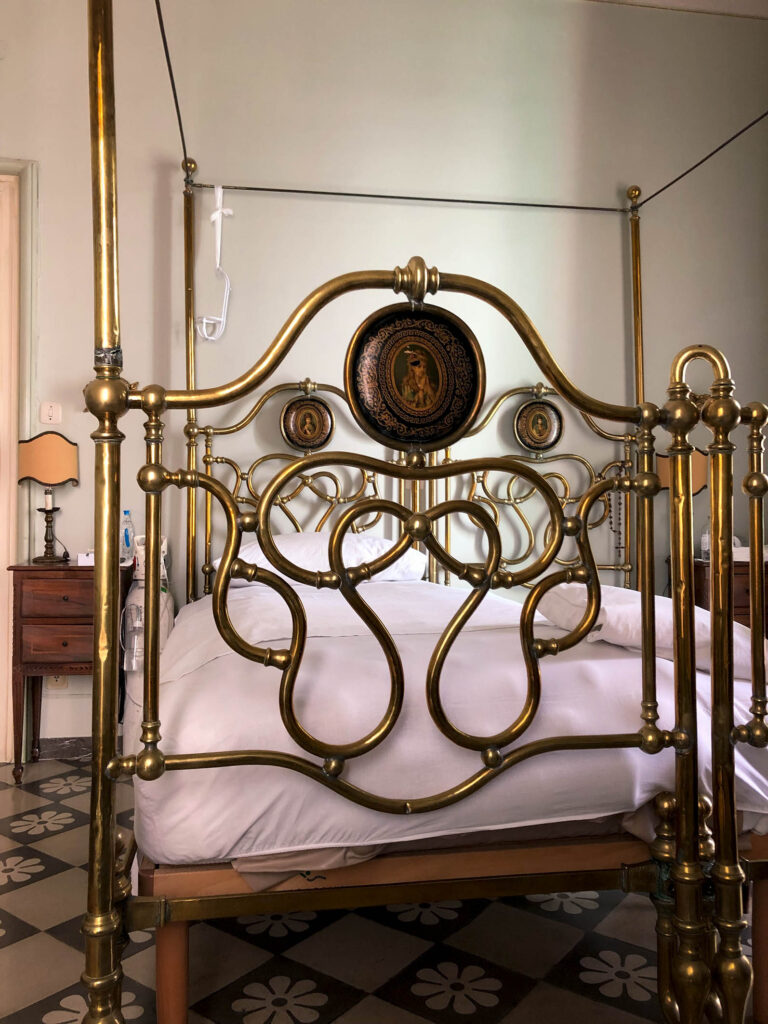
Except for a single photograph: my mother’s bed, made up (taken one day when she was temporarily sitting in the armchair). And these words.